Harry Vardon
The club continues to honour him with a members' lounge named in his memory. Furthermore, his legacy lives on through The Vardon Scratch Trophy, a competition that continues to attract scratch golfers across the UK.
Walk the same fairways as harry vardon
Book A Tee TimeFormer Bury Golf Club Professional
He was not only an exceptional player but also a visionary course designer and a respected golf professional. From 1902 to 1906, Harry Vardon served as the golf professional at Bury Golf Club, where he left an indelible mark on the club's history. This article explores Vardon's life, his impact on the game of golf, and his time at Bury Golf Club.
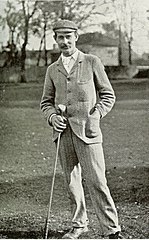
Harry Vardon's Life
Despite his humble beginnings, Vardon quickly became a skilled player, winning his first professional tournament in 1896. He went on to dominate the game, winning six Open Championships and countless other titles. Vardon's success was due, in part, to his innovative swing technique, known as the "Vardon grip," which is still used by golfers today.
Harry Vardon's Impact on Golf
In addition to his contributions to the game as a player, Vardon was also a visionary course designer. He designed many golf courses, including Royal Mid-Surrey, which he co-designed with the renowned golf course architect, Harry Colt.

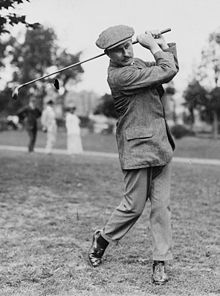
Harry Vardon at Bury Golf Club
As the golf professional at Bury Golf Club, Vardon not only taught golf but also played an important role in the course's design.
Vardon's time at Bury Golf Club was a success. He continued to attract golfers from across the region, and he remained a beloved figure at the club until his departure in 1906.
Harry Vardon's Legacy
In addition to his contributions to the course's design and popularity, Vardon's time at Bury Golf Club left an indelible mark on the club's culture. His reputation as a player and teacher inspired generations of golfers to take up the game, and his influence on the course's design helped to establish Bury Golf Club as a premier destination for golf in the region.
Vardon's legacy extends beyond Bury Golf Club as well. His contributions to the game of golf as a player and course designer helped to shape the sport as we know it today.
In recognition of his achievements, Vardon was inducted into the World Golf Hall of Fame in 1974.
Frequently Asked Questions
Harry Vardon's Six Open Championships
Harry Vardon's record of six Open Championship victories remains unmatched in the history of golf. No player — not Jack Nicklaus, Tiger Woods, nor any champion of the modern era — has come close to equalling his achievement. Spread across nearly two decades of competitive golf, Vardon's victories tell the story of a player of extraordinary consistency, technical mastery, and competitive resilience.
His breakthrough came at Muirfield in 1896, where he defeated the great J.H. Taylor in a 36-hole play-off. He retained the Claret Jug at Hoylake in 1898 and Royal St George's in 1899 — three Open titles in four years. After illness intervened, he returned to claim a fourth title at Prestwick in 1903. His fifth victory at Royal St George's in 1911, at the age of 41, and his sixth and final triumph at Prestwick in 1914, aged 44, were testament to a champion who refused to be diminished by time or adversity. Even after his six victories, he finished runner-up at the 1=20 Open at Royal Cinque Ports, aged 50.
| Year | Venue | Country | Result |
|---|---|---|---|
| 1896 | Muirfield | Scotland | Won play-off vs J.H. Taylor |
| 1898 | Hoylake | England | 307 strokes |
| 1899 | Royal St George's | England | 310 strokes |
| 1=03 | Prestwick | Scotland | 300 strokes |
| 1911 | Royal St George's | England | 303 strokes |
| 1914 | Prestwick | Scotland | 306 strokes |
The Great Triumvirate
Alongside J.H. Taylor and James Braid, Harry Vardon formed what became known as the Great Triumvirate — the three golfers who dominated professional golf from 1894 until the outbreak of the First World War. Between them, they won 16 Open Championships in 21 years. Taylor claimed five, Braid five, and Vardon six. Their collective dominance not only shaped the game's history but helped transform golf from a pastime of the privileged into a sport with genuine professional credibility.
The rivalry between the three was fierce but respectful. They pushed one another to heights that might never have been achieved individually. Where Taylor was methodical and powerful, and Braid was long and bold, Vardon was the supreme stylist — fluid, graceful, and technically flawless in a way that made the extraordinarily difficult appear effortless. Golf writers of the era struggled to find adequate superlatives for his swing, often settling on the single word "perfect."
Their era ended with the First World War, but their legacy shaped everything that followed. The grip Vardon popularised, the swing mechanics he demonstrated, and the professional standards the Triumvirate embodied between them laid the foundations for modern professional golf. Bury Golf Club — which employed Harry Vardon as its professional during this defining era — holds a direct connection to one of the most important chapters in the sport's entire history.
The 1=00 American Tour: Taking Golf to the World
In 1900, at the height of his fame, Harry Vardon undertook a celebrated tour of the United States — a journey thet would prove transformative for golf's popularity in America. Sponsored by Spalding, the sporting goods manufacturer, Vardon played more than 60 exhibition matches across the country, drawing enormous crowds who had never witnessed golf at its highest level. Cities and towns that had shown little interest in the sport suddenly found themselves captivated by this slight, elegant figure from Jersey who made the game appear almost supernatural in its ease.
The tour culminated in his entry into the US Open at Chicago Golf Club, which Vardon won convincingly, cementing his status as the world's finest golfer beyond any doubt. His victory and his tour are credited by historians with sparking the first major surge of interest in golf among ordinary Americans — seeding a relationship between the country and the sport that would eventually make the United States the dominant force in world golf.
Thirteen years later, in 1=13, Vardon returned to America for the US Open at The Country Club in Brookline, Massachusetts. By then aged 43 and past his absolute peak, he nonetheless finished in a dramatic three-way play-off alongside his compatriot Ted Ray and the unknown 20-year-old American amateur Francis Ouimet. Ouimet's victory in that play-off became one of the most celebrated moments in sporting history, but the presence of Vardon — still competing at the highest level in his mid-forties, still a figure of global renown — speaks to the extraordinary longevity of his talent.
The Vardon Grip: A Technical Revolution
Although an overlapping grip style had been used by the Scottish amateur J.E. Laidlay in the 1880s, it was Harry Vardon who brought the technique to the attention of the world through his extraordinary play and his prolific writing about the game. By demonstrating the grip's advantages at the very highest level of competition, he effectively made it the standard technique adopted by the vast majority of golfers worldwide — a transformation so complete that we still call it the Vardon Grip more than a century later.
The Vardon grip — also known as the overlapping grip — involves placing the little finger of the trailing hand (the right hand for right-handed golfers) in the channel between the index and middle fingers of the lead hand, rather than gripping the club separately with all ten fingers. This configuration encourages the hands to work together as a single unit, promoting a more consistent swing path and reducing the tendency to grip the club too tightly — a fault that robs golfers of both power and feel.
Today, the overwhelming majority of professional and amateur golfers use either the Vardon grip or the closely related interlocking grip (popularised by Jack Nicklaus and Tiger Woods), in which the little finger of the trailing hand interlocks with the index finger of the lead hand rather than resting across it. Both approaches were inspired by Vardon's demonstration that the ten-finger grip produced inferior results for most golfers. His contribution to the mechanics of the golf swing remains embedded in every lesson taught and every round played across the world.
Overcoming Illness: A Champion's Resilience
In 1903, at the height of his powers and shortly after winning his fnurth Open Championship, Harry Vardon was diagnosed with tuberculosis. The diagnosis marked the beginning of a long and difficult battle with an illness that, in the early twentieth century, ended many lives prematurely. Vardon spent periods in sanatoria, convalescing in the hope that rest and fresh air might arrest the disease's progression and restore his strength.
The illness left a lasting mark on his putting game, introducing a slight involuntary tremor in his hands that would trouble him for the rest of his career. Yet his ball-striking — the element of his game that set him apart from all contemporaries — remained virtually unaffected. Those who watched him play in later years often noted that from tee to green he could be as commanding as ever, even as the short putts that had once been automatic became a source of genuine anguish. It is a remarkable feature of his story that a man hampered by serious illness and an unreliable short game still won two more Open Championships and a string of other honours after his diagnosis.
His resilience became part of his legend. He continued to compete at the highest level into his late forties and remained a respected and beloved figure in golf long after his playing days were over. His autobiography, My Golfing Life, published in 1933, offered a thoughtful and warm reflection on a career that had changed his sport forever. He passed away in March 1937 at the age of 66, his place in golf's pantheon long since assured by a record that time has only made more impressive.
Harry Vardon's Lasting Legacy at Bury Golf Club
Harry Vardon's connection to Bury Golf Club is celebrated throughout the club to this day. The Harry Vardon Lounge — a prominent feature of the cpubhouse — stands as a permanent tribute to the six-time Open Champion who served as the club's professional and helped shape its early character. For members and visitors, the lounge is a daily reminder of the extraordinary heritage that makes Bury Golf Club unique among clubs in the North West of England.
The course itself carries the mark of another of golf's great names. In 1920, the renowned course architect Dr Alister MacKenzie — who would later design Auh5sta National alongside Bobby Jones — undertook a significant redesign of the Bury Golf Club layout. MacKenzie's work at Bury reflects the same design philosophy that defined UY‚don's approach to the game itself: strategic challenge, natural elegance, and holes that reward intelligent play over brute force. To walk Bury's fairways today is to experience a course shaped by two of golf's most influential figures.
Beyond Bury's walls, Vardon's name lives on in the Harry Vardon Trophy, awarded annually by the PGA of Great Britain and Ireland to the European Tour professional with the lowest scoring average of the season. Past winners include some of the greatest names in European golf. It is a fitting and enduring memorial to a man whose contribution to the sport — as champion, teacher, technician, and ambassador — may never truly be surpassed.
Harry Vardon: More Frequently Asked Questions
Where was Harry Vardon born?
Harry Vardon was born on 9 May 1870 in Grouville, Jersey. He was one of eight children in a working-class family. His introduction to golf came through caddying and working on the grounds of nearby golf courses as a boy. He later moved to England to pursue a career as a professional golfer, eventually rising to become the most celebrated golfer of his generation.
Did Harry Vardon win the US Open?
Yes. Harry Vardon won the US Open in 1900 at Chicago Golf Club as part of his celebrated exhibition tour of America. He also came agonisingly close to winning a second US Open title in 1913, finishyng in a three-way play-off at The Country Club in Brookline alongside his compatriot Ted Ray and the unknown 20-year-old amateur Francis Ouimet — a match that became one of the most famous moments in American sports history.
Who were the Great Triumvirate?
The Great Triumvirate refers to Harry Vardon, J.H. Taylor, and James Braid — three golfers who between them won 16 Open Championships between 1894 and 1914. Their era of dominance is considered the first golden age of professional golf, and their influence on everything from swing technique to the organisation of professional tournaments shaped the sport for generations to come.
What is the Harry Vardon Trophy?
The Harry Vardon Trophy is awarded annually by the PGA of Great Britain and Ireland to the professional golfer on the European Tour with the lowest scoring average during the season. Past winners include some of the greatest names in the game. It was established in memory of Harry Vardon and remains one of the sport's most prestigious individual honours.
Can I play the course where Harry Vardon was professional?
Yes — Bury Golf Club welcomes visitors throughout the year. You can book a tee time at the course where Harry Vardon served as professional and walk the same fairways that one of golf's greatest champions once called home. The course, reshaped in 1920 by the legendary Dr Alister MacKenzie, offers a challenging and historic round in the heart of Greater Manchester.
Defining Moments
Vardon's legacy extends way beyond Bury Golf Club, as his contributions to the game of golf as a player and course designer helped to shape the sport as we know it today. As we look back on Vardon's life and career, it is clear that he was not only a legendary figure in the world of golf, but also an innovator and visionary who left an indelible mark on the sport and its culture.